Kerry’s story: “I’ve got my life back”
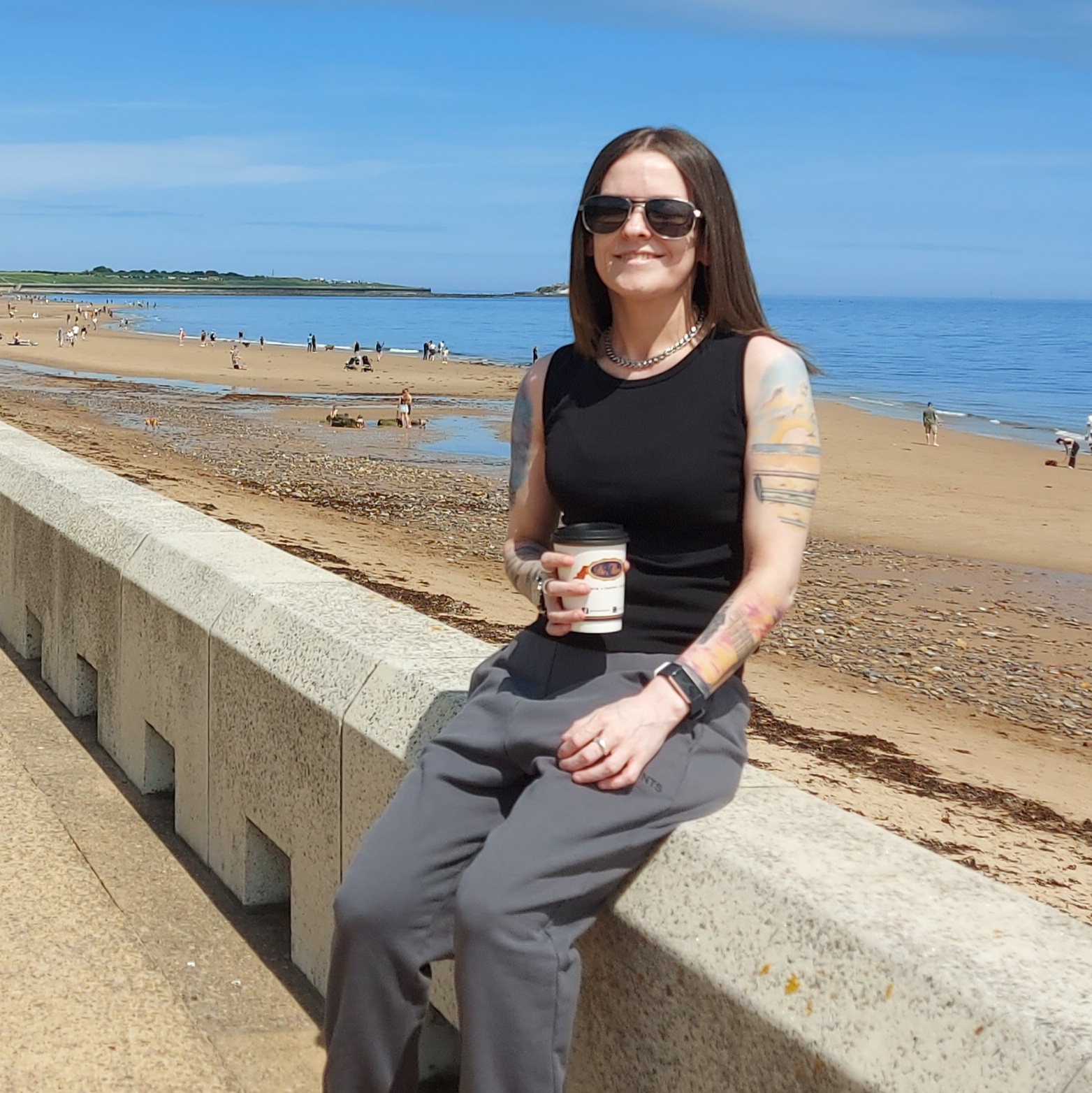
For years, Kerry White believed alcohol was helping her cope with anxiety. Instead, it gradually took over her life. Now seven months sober, the 38-year-old from Whitley Bay is sharing her story to challenge the way alcohol is normalised in society and encourage others to seek help.
“I started drinking when I was about 18, going out with friends. I felt like it was normal to get blackout drunk – no one around me questioned it. I spent a lot of time getting dressed up to go out, and I always through it was cool to get as drunk as you could.
“Even now, alcohol is glamorised everywhere. You see home décor saying ‘it’s gin o’clock’ and messages telling you wine is the answer to everything. It’s become part of everyday life.”
When Kerry went to Northumbria University to study English and Sociology, alcohol became more than part of a night out – it became a way to cope with her socialising.
“I was really shy when I first went to university and alcohol felt like the only way I could socialise. It gave me confidence to meet new people.
“Drinking also felt like the right decision. People tell you they’re the best years of your life and that you’re only young once. Drinking was encouraged everywhere. There were student deals every night and people would stop you in the street offering free drinks if you went into a club. I was drinking most days, sometimes even before lectures.”
After graduating, Kerry’s drinking escalated from nights out to becoming part of her daily routine.
“I was going to my local pub every day. The barmaid even joked that I might as well move in. I didn’t think that was weird at the time – I thought it was funny – but now I look back and realise how alarming it was.
“Sometimes I’d have vodka before I even went to the pub. Eventually I reached the point where I struggled to leave the house without drinking first.
“I became a carer and, for a while, things settled down. But then I started drinking after work to de-stress. That’s what we’re shown all the time, especially as women. Every TV programme seems to show someone pouring a glass of wine after a stressful day. Alcohol is glamorised as the solution.”
As Kerry’s mental health deteriorated, alcohol quickly became something she relied on from the moment she woke up.
“I was drinking all day, sometimes from 9am.
“I drank because I was anxious, but alcohol made my anxiety even worse. I got trapped in a cycle.”
Delivery apps meant alcohol was never far away.
“I’d use delivery apps all the time. It was so anonymous. I didn’t even have to leave the house.
“I’d wake up in the middle of the night feeling anxious and, instead of waiting for the shops to open, I’d order more alcohol. I’d bulk buy 40 cans to last two days. I didn’t leave the house for over a year because everything could be delivered.
“It got to a point where I needed alcohol just to socialise or even send a text message.”
For the next decade, Kerry tried repeatedly to stop drinking but found herself caught in a pattern of making promises she couldn’t keep.
“I used different support services and I’d constantly tell myself, ‘I won’t drink until this time,’ or ‘I’ll only have this much.’ You always end up breaking your own promises.
“It became a full-time job. Your whole day revolves around drinking and getting more alcohol. Eventually you don’t even know what else to do with your time.”
After relapsing last year, Kerry reached out for help again.
“When I first reached out, the waiting list felt so long. I remember thinking, ‘I’ll be dead by then.’
“I stopped drinking properly in December and it was probably the worst time to stop because alcohol is everywhere. It’s on TV adverts, in Christmas cards, at events and in every shop you walk into.”
Years of heavy drinking also had a lasting impact on her health.
“I developed alcoholic fatty liver disease. It affected my digestive system, and I gained a lot of weight, which made my anxiety even worse.
“Now, I’ve got my life back. I’m much healthier and happier – I spend my time weightlifting, walking along the coast and volunteering. These things have given me the confidence that alcohol couldn’t.
Looking back, she hopes people will start questioning the role alcohol plays in everyday life.
“It’s everywhere. Bottomless brunches encourage people to get blackout drunk in the middle of the day. You can’t even walk through the supermarket without seeing alcohol on offer.
“Alcohol is promoted as being social, but hangovers aren’t. Arguments aren’t. Anxiety isn’t.
“Talk to people. The opposite of addiction is connection. You’re not as alone as you think you are. More people than you realise have struggled with alcohol at some point in their lives. Reaching out is the hardest part, but it can also be the thing that changes everything.”